
The telecommunications world is continuing to change, and 3G technology represents the next stage in mobile communications. 3G is an evolution in terms of services and data speeds from second generation (2G) mobile networks.
3G is a generic term covering a range of future wireless network technologies, including WCDMA, CDMA2000, UMTS and EDGE. 3G combines high-speed (up to 2Mbit/s, compared to 2G’s 65Kbit/s and 2.5’s 144Kbit/s) mobile access with Internet Protocol (IP) based services. This doesn’t just mean fast mobile connection to the World Wide Web - by liberating us from slow connections, cumbersome equipment and immovable access points - 3G enables new ways to communicate, access information, conduct business and learn.
3G, the next generation mobile network, was launched in the UK in March 2003 by the network operator 3 (Hutchison Telecom). Other UK network operators are now online with their 3G services including Vodafone, O2, T-Mobile and Orange (with Orange Intense). All five operators have an obligation under their licences to provide 3G services to at least 80 per cent of the population by 31 December 2007.
There are now more than 62.5 million mobile phones in use in the UK. Today’s mobile customers have already demonstrated a demand for ‘non-voice’ and other new services. On average, 99 million text messages are sent every day across the UK. Proof of customer demand has also been indicated by the use of increased data services, such as instant e-mail and picture messaging, on 2G systems with GPRS (General Packet Radio Services).
3G represents the third generation of mobile phone handsets (1G was the old analogue system, 2G was the digital handsets that we’re used to today, with 2.5G representing handsets with data capabilities over GPRS). 3G broadband mobile communications makes access to sophisticated workplace technology inside your phone (3G handset compatibility required) even faster, making working life more flexible and developing still further the ‘virtual office’ complete with e-mails, video conferencing and high speed access to services without the daily commute.
The big selling point of 3G is the ability to download video clips to your handset - this can be sports snippets, music, news headlines, weather forceasts, adult content, or movie trailers. You can also make and receive video calls to/from other 3G users (see who you’re talking to in real time), and most 3G phones can take still digital pictures as well as coping with video. You can send photos to other 3G users, as well as to users with non-3G phones that use MMS, because data speeds are considerably faster than a standard 2.5G MMS phone.
Other neat features include location-based services, allowing you to see a map of where you are, and where to find nearest shops, banks, etcetera (an more), as well as download games up to 30 times faster than standard GSM phones - and play online games such as Bomberman, Splinter Cell and the old favourite Scrabble!
3G-enabled devices - including phones and laptops - work by sending and receiving radio signals to and from base stations (sometimes known as ‘masts’). Base stations link individual phones into the rest of the mobile and landline networks. Base stations are low power radio transmitters and need to be located in the areas they are intended to serve. They provide coverage to a geographical area known as a cell. These cells need to overlap to enable seamless coverage and to ensure a user does not lose connection to the network when on the move.
Radio waves used in mobile telecommunications form part of the electromagnetic spectrum. Radio waves used to deliver 3G services are transmitted at a slightly higher frequency than for 2G and travel a shorter distance. As a result the coverage area or cell size for a 3G base station is smaller than for a 2G site. Furthermore, as user demand increases in a particular cell, the size of that cell shrinks making overlap even more essential. Due to the advanced technology, the location of cell sites is even more critical with 3G networks to avoid interference between adjacent cells.
The cell sizes for 3G networks are smaller than for 2G and so more base stations are required to cover the same area. In line with planning guidance, wherever possible, operators seek to upgrade their existing base stations or share sites used by other operators. At present there are about 47,000 base station sites in the UK. Additional mobile phone base stations will need to be built to support 3G services. It is possible that the number of base station sites will rise to 50,000 by the end of 2007 to meet licence requirements, but the final number will depend on customer use. New installations that require planning consent will be subject to the appropriate planning process.
International health guidelines set by the International Commission on Non-Ionizing Radiation Protection (ICNIRP) are in place to limit public exposure to radio waves from all base stations and mobile phones. These guidelines are based on an analysis of all relevant scientific literature, including both thermal and non-thermal studies, and are designed to protect everyone in the population. The additional radio waves used in the new networks, even when combined with existing levels, will still be well within guidelines.
ICNIRP is an independent international scientific organisation that provides guidance and advice on the health hazards of non-ionizing radiation exposure. The World Health Organisation (WHO) endorses its guidelines, which apply to both 2G and 3G, and the guidelines are also recommended by the UK Government and EU. Network operators ensure all their base stations comply with the ICNIRP public exposure guidelines and provide Local Planning Authorities with a certificate of compliance with each planning application.
To date, the ‘terminal’ for accessing 3G mobile services has been the mobile phone, but there will be a wide range, from simple single-application devices such as voice-only phones, to multi-purpose communicators capable of handling several voice, data and video services in parallel. With the coming of 3G, we can expect to see a broadening of this concept to include a whole host of new terminals. These will be both general-purpose computing and communications devices, and devices with more specific purposes to serve particular marker segments. There will still be recognisable mobile phones. But many of these will have larger screens to display Internet pages or the face of the person being spoken to.
There will be smaller ‘smartphones’ with limited Web browsing and e-mail capabilities. The addition of mobile communications capabilities to laptop and palmtop computers will speed up the convergence of communications and computing, and bring to portable computing most of the functions and features available on the latest desktop computers. There will be videophones, wrist communicators, palmtop computers, and radio modem cards for portable computers. Innovative new voice-based interfaces will allow you to control your mobile communication services with voice commands.
We will also see the integration of 3G into a very wide range of devices and products other than user terminals. For example, the ‘telephone-on-a-card’ will allow mobile services to be built into business equipment, vehicles and household appliances, for dedicated applications. Devices such as phones, computers and digital cameras will also be able to communicate with each other using short-range radio. Digital cameras will be able to use wide-area radio communications in real time and reduce the need for bulky memory and other components.
http://www.biosmagazine.co.uk

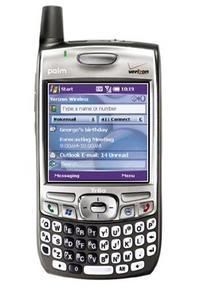 People using the system password lock to secure data on their Palm Treo smart phone may not be as safe as they think they are.


