Monday, April 30, 2007
Bonsai


Tuesday, April 24, 2007
English Grammar & Writing Software
Enhance your English writing and grammar
We take your writing from simple to sophisticated. Grammar, enhancement, spelling, dictionary, and punctuation checks.

WhiteSmoke Text Enrichment • Grammar • Thesaurus • Spelling • Templates • The only true all-in-one Solution! NEW VERSION!

Continue Reading
We take your writing from simple to sophisticated. Grammar, enhancement, spelling, dictionary, and punctuation checks.
WhiteSmoke Text Enrichment • Grammar • Thesaurus • Spelling • Templates • The only true all-in-one Solution! NEW VERSION!
Wednesday, April 18, 2007
Go-Ped
Speedy, local electro-commuting
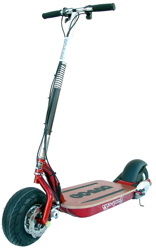
This electric scooter is a fun and practical means of transport for anyone looking for eco-friendly, short-range transport. My 40-minute, 2.5 mile walk to work is now a 15 minute ride. I now get to work without showing up soaked in sweat, like I did riding my bike. And I love avoiding the Seattle public transit system.
The ESR 750 EX has a purported range of 8 miles (12 miles in "econo mode"). With all the hills I have to climb in Seattle, I mostly use it in "turbo mode," which truncates the range, but it's actually a more fun ride that way. Set aside the fact it's taken me up every long, steep hill I've attempted. This thing is a blast to drive. It gives one the sensation of flying.
I looked at plenty of scooters out there. You can get an electric scooter for less, $300-$600 maybe, but not one that will take on Seattle-size hills. For longer range, an electric bike or gas powered scooter may be the way to go. But as I only have to go 2.5 miles to work, I was more interested in something that could also be safely brought into my building, where I don't have to worry about parking and a 'free,' full recharge takes three to four hours. The Go-Ped also breaks down and stows away easily.
You can also buy all sorts of add-ons, including a seat, which I did not get. I prefer to stand and, to me, the seat looks a little goofy. Sure you can spend thousands on fancier models, if that seems worth it to you, but at around $800, this Go-Ped is a good middle ground. Another scooter in this range, the Rad2Go Great White, was a close second in my mind, but it's nearly 100lbs. The Go-Ped is about 60lbs., which seems more practical if I ever have to carry it.
I was concerned that car drivers and pedestrians would view me as an annoyance (I mostly ride on the street, following the same rules as a bike), but that doesn't seem to be the case. I'm trying not to be an obnoxious driver myself and most people seem to regard it with curiosity and amusement, sometimes outright envy.
-- Bez Palmer
Continue Reading
This electric scooter is a fun and practical means of transport for anyone looking for eco-friendly, short-range transport. My 40-minute, 2.5 mile walk to work is now a 15 minute ride. I now get to work without showing up soaked in sweat, like I did riding my bike. And I love avoiding the Seattle public transit system.
The ESR 750 EX has a purported range of 8 miles (12 miles in "econo mode"). With all the hills I have to climb in Seattle, I mostly use it in "turbo mode," which truncates the range, but it's actually a more fun ride that way. Set aside the fact it's taken me up every long, steep hill I've attempted. This thing is a blast to drive. It gives one the sensation of flying.
I looked at plenty of scooters out there. You can get an electric scooter for less, $300-$600 maybe, but not one that will take on Seattle-size hills. For longer range, an electric bike or gas powered scooter may be the way to go. But as I only have to go 2.5 miles to work, I was more interested in something that could also be safely brought into my building, where I don't have to worry about parking and a 'free,' full recharge takes three to four hours. The Go-Ped also breaks down and stows away easily.
You can also buy all sorts of add-ons, including a seat, which I did not get. I prefer to stand and, to me, the seat looks a little goofy. Sure you can spend thousands on fancier models, if that seems worth it to you, but at around $800, this Go-Ped is a good middle ground. Another scooter in this range, the Rad2Go Great White, was a close second in my mind, but it's nearly 100lbs. The Go-Ped is about 60lbs., which seems more practical if I ever have to carry it.
I was concerned that car drivers and pedestrians would view me as an annoyance (I mostly ride on the street, following the same rules as a bike), but that doesn't seem to be the case. I'm trying not to be an obnoxious driver myself and most people seem to regard it with curiosity and amusement, sometimes outright envy.
-- Bez Palmer
Wednesday, April 4, 2007
Rotating Earth Watch
The Earth on your wrist
What is this? Well, it's a watch with a small rotating Earth that makes a full rotation once every 24 hours. Designed in Japan and made by Seiko Instruments, this is an interesting and unique timepiece. There is a small time zone indicator for the hour and a small orange dot to indicate the minutes. The movement is Quartz with a custom set of 3 reducing gears in the drive train and is powered by a 10 year Lithium battery. The bezel is 45 mm in diameter and the entire case is made of light weight Titanium. The crystal is super tough Hardlex and is of optical quality to create the effect of the Earth floating inside the frame.

This watch has these great features.
Continue Reading
What is this? Well, it's a watch with a small rotating Earth that makes a full rotation once every 24 hours. Designed in Japan and made by Seiko Instruments, this is an interesting and unique timepiece. There is a small time zone indicator for the hour and a small orange dot to indicate the minutes. The movement is Quartz with a custom set of 3 reducing gears in the drive train and is powered by a 10 year Lithium battery. The bezel is 45 mm in diameter and the entire case is made of light weight Titanium. The crystal is super tough Hardlex and is of optical quality to create the effect of the Earth floating inside the frame.
This watch has these great features.
- Watch with a small rotating Earth that makes a full rotation every 24 hours
- Quartz movement
- The entire case is made of light weight Titanium
- The virtual Earth rotates once a day as the real Earth does in a counter clockwise direction with the time zone indicator pointing to the correct hour on the bezel
- Created by a team of artists and designers from Japan with manufacturing assistance from
- Seiko Instruments
- Water resistant to 100m
- 10 year Lithium battery (included)
Subscribe to:
Posts (Atom)


